
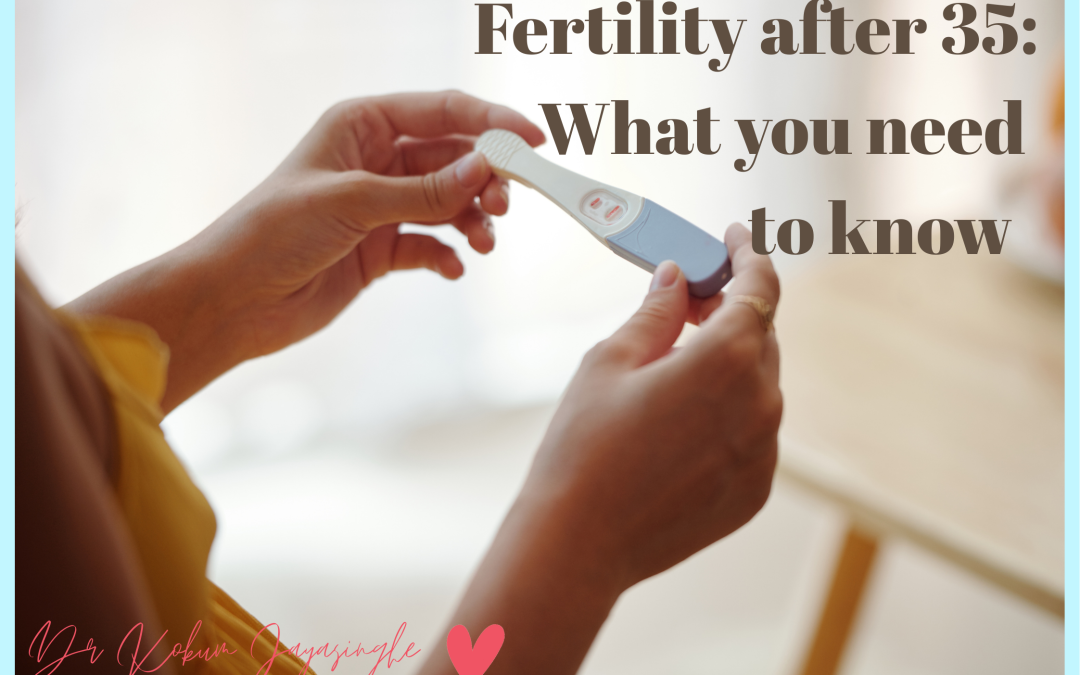
If you’re thinking about starting or growing your family after 35, you’re not alone and you’re certainly not out of time. But having realistic expectations and the right support can make all the difference in your journey.
How Fertility Changes After 35
Fertility naturally declines with age. After 35, the decline becomes more noticeable, and after 40 it can become steeper. This doesn’t mean pregnancy isn’t possible — many women conceive and carry healthy pregnancies in their late 30s and 40s. But it often takes longer, and additional medical support may sometimes be needed.
When to Seek Support
If you’ve been trying to conceive for more than 6 months without success and you’re over 35, it’s a good idea to consult a fertility specialist. For younger women, doctors typically recommend waiting 12 months — but after 35, earlier intervention ensures valuable time isn’t lost.
Dr. Kokum’s Tip: Knowledge Is Power
A simple fertility check-up is often the best first step. This may include assessing your ovarian reserve, checking your cycle health, and evaluating your partner’s fertility status. Understanding these factors empowers you to make informed, timely decisions about your next steps.
Planning Ahead: Family Goals
It’s also worth thinking about the bigger picture: how many children you hope to have, and when. If you’re starting later, options like egg or embryo freezing may help preserve your chances for the future.
Your Options
Every fertility journey is unique. For some, natural conception is possible with time and support. For others, assisted reproductive treatments such as IVF, ovulation induction, or donor eggs may be recommended. Whatever the path, you don’t have to walk it alone.
At Melbourne IVF, we’re here to support you with compassion, clarity, and the latest in reproductive medicine so you can move toward your dream of parenthood with confidence.