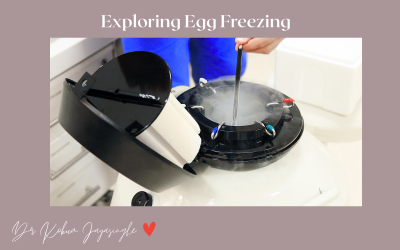
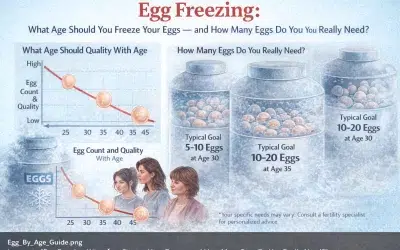
Egg freezing has become increasingly common, particularly for women who know they would like children in the future but are not ready to start a family now. One of the most common questions I am asked is: "Am I too young to freeze my eggs?" Very quickly followed by:...
Lastest Blog Posts
What the evidence and ESHRE guidelines actually tell us
One of the most common questions I hear from women with endometriosis who are trying to conceive is: “Should I have surgery first, or should I go straight to IVF?” It sounds like it should have a simple answer. It doesn't. For some women, surgery may improve the...
What the PROMISE and PRISM trials really tell us
Progesterone is one of the most commonly discussed treatments after miscarriage. After two or three pregnancy losses, it is understandable for patients to ask: “Should I take progesterone next time?” And often the question is even more difficult: “If progesterone is...
PCOS Is Now PMOS: Why the Name Has Changed — and What It Means for Fertility
September is PCOS Awareness Month — but in 2026, there is something very important to be aware of: PCOS has a new name. Polycystic Ovary Syndrome (PCOS) has officially been renamed Polyendocrine Metabolic Ovarian Syndrome (PMOS). At first glance, changing the name of...
Fresh or Frozen Embryo Transfer: Is One Really Better?
One of the questions I am often asked in an IVF consultation is: "Is a frozen embryo transfer better than a fresh transfer?" My answer is usually: not necessarily. And perhaps I am particularly qualified to sit on the fence on this one. My two boys came from the same...
Does PGT-A Improve Your Chance of Having a Baby? What the Evidence Really Tells Us
One of the questions I am increasingly asked by patients undergoing IVF is: “Should I test my embryos?” It sounds like a simple question. But my answer is rarely an automatic yes or no. PGT-A — preimplantation genetic testing for aneuploidy — can provide valuable...
What Is PGT Testing?
If you're undergoing IVF, you may have heard the term PGT and wondered what it means. PGT stands for Preimplantation Genetic Testing. It is a specialised form of genetic testing that can be performed on embryos created through IVF before an embryo is selected for...
IVF Myths vs Facts: Separating Fiction from Reality
When people hear the term IVF (In Vitro Fertilisation), it's often accompanied by stories from friends, headlines in the media, or information shared online. Unfortunately, not all of that information is accurate. Misconceptions about IVF can create unnecessary fear,...
Men’s Health and Fertility: Why Male Fertility Matters
When couples experience difficulty conceiving, many people instinctively assume the cause lies with the woman.In reality, fertility is a shared journey. Male factors contribute to fertility challenges in up to 50% of couples experiencing infertility, making male...
You’ve Been Diagnosed with Fibroids. What Does It Mean?
Being told you have fibroids can come as a surprise, especially if they were discovered during a routine scan or while investigating symptoms such as heavy periods or fertility concerns.For many women, the first reaction is often worry. Are they dangerous? Will I need...
Are Your Periods Irregular, Very Long, or Absent? What Your Menstrual Cycle Could Be Telling You
Your menstrual cycle is much more than a monthly period—it is one of the most important indicators of your reproductive health. While every woman is different, your cycle can provide valuable insight into how your hormones are functioning, whether you are ovulating...
You’ve Been Trying to Conceive for 12 Months Without Success: What Should You Do Next?
Trying to conceive is often described as an exciting chapter in life. But when each month passes without a positive pregnancy test, it can quickly become a source of stress, uncertainty, and emotional exhaustion. Many people wonder how long they should keep trying...
There Is Strength in Seeking Fertility Support
For many people, asking for help is one of the hardest parts of the fertility journey. There can be a quiet belief that you should keep trying on your own, wait a little longer, or simply hope that things will happen with more time. Some people worry that seeking...
PCOS or PMOS? Why the Name Change Matters
For many years, Polycystic Ovary Syndrome (PCOS) has been one of the most common hormonal conditions affecting women of reproductive age. Yet despite its prevalence, its name has often caused confusion. Many women diagnosed with PCOS do not actually have ovarian...
Starting Again After a Failed IVF Cycle
There is a particular kind of exhaustion that can follow an unsuccessful IVF cycle. It is not just physical. It can be emotional, mental, and deeply personal. After investing so much hope, time, energy, and courage into treatment, hearing that a cycle has not resulted...
How Fertility Changes with Age
When it comes to fertility, age is one of the most important factors influencing the chance of conception. Yet many people are surprised to learn how fertility changes over time and what those changes can mean for family planning. While age does not determine an...
The First Step Isn’t Always Treatment
When people think about fertility care, they often assume that the next step is treatment. IVF. Medications. Procedures. Interventions. But in reality, fertility care often begins somewhere much simpler. It begins with understanding. Before decisions are made about...
Male fertility
When couples are trying to conceive, the focus often falls on the woman first. Questions about ovulation, menstrual cycles, egg quality, and reproductive health are frequently at the centre of fertility discussions. While these factors are important, they are only...
Can Lifestyle Changes Improve Fertility?
When people begin thinking about fertility, their attention often turns to medical treatments, fertility testing, or assisted reproductive technologies such as IVF. While these can be important parts of fertility care, they are only one piece of the picture. Everyday...
Optimising Natural Fertility & Navigating Treatment
Infertility is common. One in 20 Victorian children is born through some form of artificial reproductive technique. Yet, before moving to advanced treatments, helping women and couples optimise their natural fertility is a true passion of mine. Understanding Your...
It Takes Two: Understanding Sperm Health and Male Fertility
There is an old saying that it takes two to tango, and this applies perfectly when a couple decides to have a baby. Culturally, infertility was historically assumed to be a female issue. Today, we know better. The Male Factor in Conception When investigating...
Age, Fertility, and the Power of Egg Freezing
The greatest challenge of reproductive medicine today is meeting the expectations of women whose fertility has been affected by age. While staying fit, eating well, and avoiding smoking are excellent for your health, the most important prognostic factor for fertility...
My Journey: Why I Am Passionate About Fertility
My 12-year-old son asked me recently if I had trouble having him, and if that is how I ended up as a fertility doctor. The truth is, I never had an initial ambition to become a fertility specialist. It was my life events and personal experiences that directed me down...
Age and Fertility: Understanding the Role Age Can Play in Family Planning
When planning to start or grow a family, there are many factors that can influence fertility. One of the most important and often most discussed is age. Age can affect both the chance of achieving pregnancy and the likelihood of maintaining a healthy pregnancy over...
Fertility Care Can Start With a Conversation
When people think about fertility care, they often picture treatments, medications, scans, or procedures. But fertility care does not always begin there. Sometimes, it begins with a conversation. A conversation where you can ask questions openly.A space where you can...
Navigating the Heartbreak of Pregnancy Loss: You Are Not Alone
Losing the pregnancy you have always dreamed of is devastating. It is an experience that can deeply affect every part of your life, as well as your partner's. Medically speaking, a miscarriage is defined as the loss of a pregnancy between 6 and 20 weeks. The majority...
Do I Need IVF? Understanding Your Options on the Path to Parenthood
"Do I need IVF?" As a fertility specialist, this is one of the most common questions I hear. For some, the answer is simple. If there is a physical barrier preventing the egg and sperm from meeting—such as a tubal blockage—the answer is black and white. In those...
Be the Best Version of Yourself
Your doctor matters.Your clinic matters.Your treatment plan matters. But there is one factor that quietly influences every fertility journey: You. Your health, your lifestyle, your consistency, and the way you care for yourself throughout the process all play a...
When Should You See a Fertility Specialist?
For many people, the decision to seek fertility advice isn’t always straightforward. There can be uncertainty around what’s “normal,” how long to keep trying, and when it might be time to ask for help. The reality is that early guidance doesn’t always mean...
New Year. New Plans. New Options – Egg Freezing
Thinking about egg freezing in 2026?Here’s what matters. Egg freezing is about choice — not pressure.It allows time to focus on career, relationships, health, or simply life, while keeping future options open. Age plays a bigger role than many realise.Egg quality...
Why choose Dr Kokum Jayasinghe?
With every one of your visits at my clinic and all throughout your experiences working with me as your fertility specialist, you can always expect the following: