
One of the questions I am often asked in an IVF consultation is:
“Is a frozen embryo transfer better than a fresh transfer?”
My answer is usually: not necessarily.
And perhaps I am particularly qualified to sit on the fence on this one.
My two boys came from the same IVF stimulation cycle. One was born following a fresh embryo transfer. The other came later, from a frozen embryo from that same cycle.
I love them both dearly — and I wouldn’t have done it any other way.
That experience also reflects something I believe strongly in as a fertility specialist: there isn’t one embryo‑transfer strategy that is right for every woman.
The question should not simply be, “Is fresh or frozen better?”
A much better question is:
“Which approach is right for me, in this particular IVF cycle?”
What is the difference between fresh and frozen embryo transfer?
After an IVF egg collection, embryos are created and cultured in the laboratory.
Fresh embryo transfer
An embryo is transferred into the uterus several days after the egg collection, during the same treatment cycle.
Frozen embryo transfer (FET)
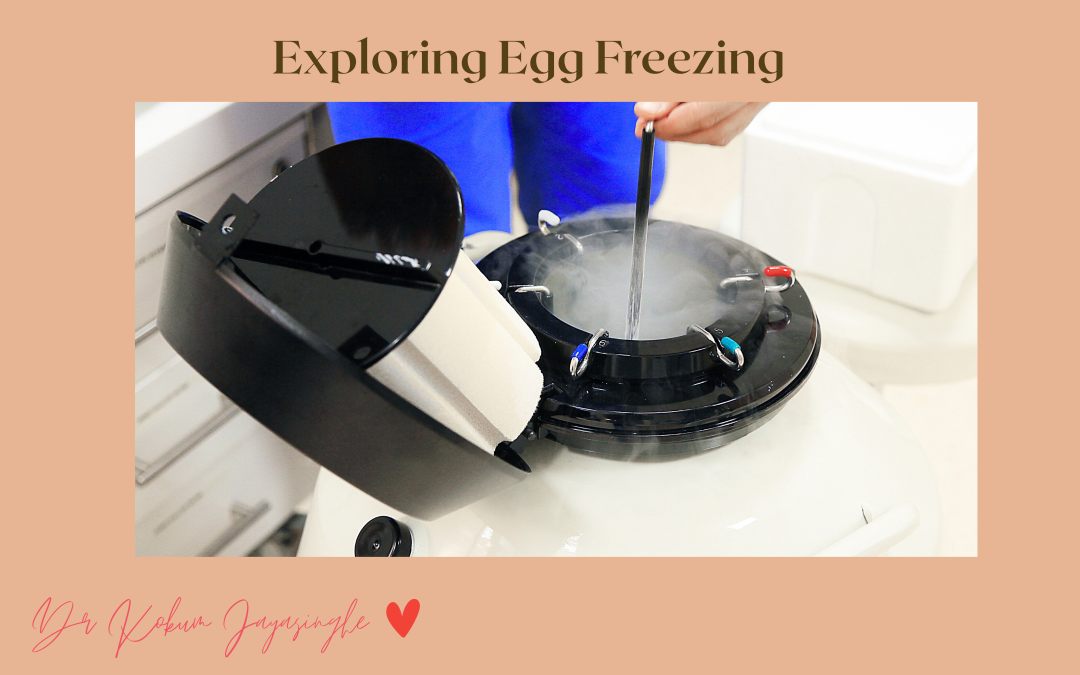
suitable embryos are cryopreserved using vitrification and transferred in a later menstrual cycle.
Modern vitrification is an extraordinary technology and has transformed IVF. It allows us to:
- safely store embryos
- undertake genetic testing when appropriate
- reduce the risk of ovarian hyperstimulation syndrome (OHSS)
- plan embryo transfer for a later cycle when circumstances are more favourable
But the fact that we can freeze embryos very successfully does not mean that every embryo needs to be frozen.
Is frozen embryo transfer more successful than fresh?
For most ovulatory women, the evidence does not support a blanket statement that frozen transfer is better.
A large multicentre randomised trial of 2,157 ovulatory women published in the New England Journal of Medicine compared fresh embryo transfer with freezing embryos and transferring them later.
The live birth rates were essentially the same:
- 50.2% following fresh transfer
- 48.7% following frozen transfer
Another randomised trial comparing a freeze‑all strategy with fresh blastocyst transfer in women with regular menstrual cycles similarly found no significant improvement in live birth with routine freeze‑all.
Longer‑term follow‑up of that trial is particularly interesting. When researchers considered all subsequent frozen transfers from the original egg collection, cumulative live birth remained virtually identical:
- 42.6% with freeze‑all
- 41.7% with a fresh‑transfer strategy
But there was one important difference.
The median time to the first pregnancy was approximately 106 days after freeze‑all, compared with 29 days following the fresh‑transfer strategy.
That matters to patients.
Most women sitting in front of me would have preferred to be pregnant yesterday.
If there is no medical reason to delay embryo transfer, I don’t believe we should automatically make a patient wait another cycle simply because freezing is available.
When do I consider a fresh embryo transfer?
If a woman has responded appropriately to stimulation, has no significant risk of OHSS, her endometrium looks appropriate and there is no concerning premature progesterone rise, a fresh embryo transfer can be a perfectly reasonable option.
I don’t make that decision from a single blood‑test number.
I assess the whole cycle — including:
- ovarian response
- progesterone around the time of trigger
- endometrial development
- symptoms
- embryo factors
- the individual woman’s circumstances
This becomes particularly relevant in women with a lower ovarian response.
A patient may have only one embryo, sometimes of less‑than‑perfect morphology, and it may represent her only or last opportunity from that cycle. Provided the uterine and hormonal environment is appropriate, the potential benefits and disadvantages of transferring that embryo fresh deserve individual discussion rather than automatically applying a freeze‑all policy.
Recent evidence makes this particularly interesting.
A 2025 multicentre randomised trial published in The BMJ studied women considered to have a low prognosis for IVF treatment:
- Live birth occurred in 40% of women assigned to fresh transfer, compared with 32% assigned to frozen transfer.
- Cumulative live birth within one year was also higher with the fresh‑transfer strategy: 51% versus 44%.
This doesn’t mean every poor responder should have a fresh transfer.
It does mean we should be careful about assuming that freezing first is always harmless or automatically superior.
When is freezing all embryos the better decision?
There are situations where I would actively recommend postponing embryo transfer and freezing suitable embryos.
These include:
- Significant risk of ovarian hyperstimulation syndrome (OHSS)
- Premature progesterone elevation, suggesting that embryo and endometrium may no longer be optimally synchronised
- An endometrial abnormality or uterine pathology that needs investigation or treatment first
- Preimplantation genetic testing (PGT), where embryos need to be biopsied and results obtained before transfer
- Circumstances where there is another clinical reason to delay pregnancy
- Patient preference
The OHSS indication is particularly well established. The American Society for Reproductive Medicine recommends considering a freeze‑only strategy in women at significant risk of OHSS, supported by high‑quality evidence showing that it reduces moderate‑to‑severe OHSS.
So this isn’t an argument against frozen embryo transfer.
It is an argument for using frozen embryo transfer when it provides an advantage to that particular patient.
And if we use a frozen embryo — does the type of frozen cycle matter?
Absolutely.
This is an increasingly important part of the discussion.
A frozen embryo transfer can be performed in several ways. Two common approaches are:
Natural or modified‑natural FET
We work with the woman’s own ovulatory cycle. She develops a follicle, ovulates and forms a corpus luteum, which naturally produces hormones that support early pregnancy.
Programmed or artificial FET
The endometrium is prepared using oestrogen and progesterone medication without relying on spontaneous ovulation.
Programmed cycles are extremely useful and are sometimes necessary. But if a woman ovulates regularly and there is no clinical reason to suppress that physiology, my preference is often to work with her body rather than against it.
Why add medication she may not need?
There may also be another important reason.
The corpus luteum may matter more than we once realised
For years we concentrated primarily on implantation and pregnancy rates when comparing different frozen‑transfer protocols.
Increasing evidence suggests we also need to think about what happens throughout the pregnancy.
A systematic review and meta‑analysis in Human Reproduction found programmed FET cycles were associated with higher rates of hypertensive disorders of pregnancy and pre‑eclampsia compared with natural‑cycle FET, although much of this earlier evidence was observational and therefore could not prove causation.
Then came an important randomised trial.
Published in The BMJ in January 2026, the study randomised 4,376 ovulatory women undergoing frozen single‑blastocyst transfer to either a natural ovulation regimen or a programmed hormone regimen.
The healthy live birth rate was essentially the same:
- 41.6% with natural ovulation
- 40.6% with programmed treatment
But among women who became pregnant, pre‑eclampsia occurred in 2.9% following the natural regimen, compared with 4.6% following programmed treatment.
The natural group also experienced lower rates of hypertensive disorders of pregnancy, postpartum haemorrhage and several other maternal complications, although natural cycles had a higher cancellation rate.
One possible biological explanation involves the corpus luteum.
The corpus luteum doesn’t simply make progesterone. It produces a number of vasoactive substances involved in the cardiovascular adaptations of early pregnancy. In a completely programmed FET cycle where ovulation does not occur, there is no corpus luteum.
This remains an evolving area of reproductive medicine, and programmed FET remains an appropriate and valuable treatment for many women. More recent research also reminds us that risk is individual and that artificial cycles should not simply be abandoned.
But for an ovulatory woman, it gives us another reason to ask whether medication is actually necessary.
Does this mean natural FET is always better?
No — and this is where fertility medicine becomes individualised.
- Some women don’t ovulate predictably.
- Some have very irregular cycles.
- Some require hormonal preparation for clinical reasons.
- Some patients find intensive monitoring difficult because of work, travel, distance or family commitments.
And programmed cycles allow far greater control over timing.
Even within natural‑cycle treatment, there are different approaches. A modified‑natural cycle, where ovulation may be triggered rather than simply waiting for a spontaneous LH surge, can provide some scheduling flexibility while preserving the corpus luteum. Available evidence suggests modified‑natural and true‑natural approaches can achieve comparable live birth rates.
The goal isn’t to make one protocol the winner.
The goal is to choose intelligently.
So, fresh or frozen?
My answer remains:
Neither is automatically better.
For some women, freezing embryos is clearly safer and medically preferable.
For others, there may be absolutely no reason not to proceed with a fresh embryo transfer.
And when using a frozen embryo in a woman who ovulates regularly, I think we should also ask whether we can safely work with her natural physiology rather than automatically using a programmed cycle.
IVF has given us extraordinary technology.
But more technology doesn’t necessarily mean that every patient needs more intervention.
Sometimes the most sophisticated decision in fertility treatment is knowing when to use technology — and when not to.
And if anyone asks me whether I personally prefer fresh or frozen?
I really can’t choose.
My two boys came from the same stimulation cycle: one fresh and one frozen. I love them both dearly.
I think I’ll call that one a draw.
Speak with a Melbourne fertility specialist about your embryo transfer
Considering IVF or planning your next embryo transfer?
Dr Kokum Jayasinghe is a fertility specialist in Collingwood, Melbourne. Request an appointment or call 03 9417 3755.
- Shi Y, Sun Y, Hao C, et al. Transfer of Fresh versus Frozen Embryos in Ovulatory Women. New England Journal of Medicine. 2018;378:126-136.
- Stormlund S, Sopa N, Zedeler A, et al. Freeze-all versus fresh blastocyst transfer strategy during in vitro fertilisation in women with regular menstrual cycles: multicentre randomised controlled trial. BMJ. 2020;370:m2519.
- Stormlund S, et al. Cumulative live birth rates in a freeze-all or fresh transfer strategy after one ART cycle in ovulatory women. 2024.
- Frozen versus fresh embryo transfer in women with low prognosis for in vitro fertilisation treatment: pragmatic, multicentre, randomised controlled trial. BMJ. 2025;388:e081474.
- American Society for Reproductive Medicine Practice Committee. Prevention of moderate and severe ovarian hyperstimulation syndrome: a guideline. 2023.
- Busnelli A, et al. Obstetric and perinatal outcomes following programmed compared to natural frozen-thawed embryo transfer cycles: a systematic review and meta-analysis. Human Reproduction. 2022;37:1619-1641.
- Wei D, Qin Y, Sun Y, et al. Natural ovulation versus programmed regimens before frozen embryo transfer in ovulatory women: multicentre, randomised clinical trial. BMJ. 2026;392:e087045.
- Endometrial preparation protocols for frozen embryo transfer: risk assessment and individualized management. Human Reproduction. 2025;40:1815-1827.