
Adenomyosis Treatment in Melbourne
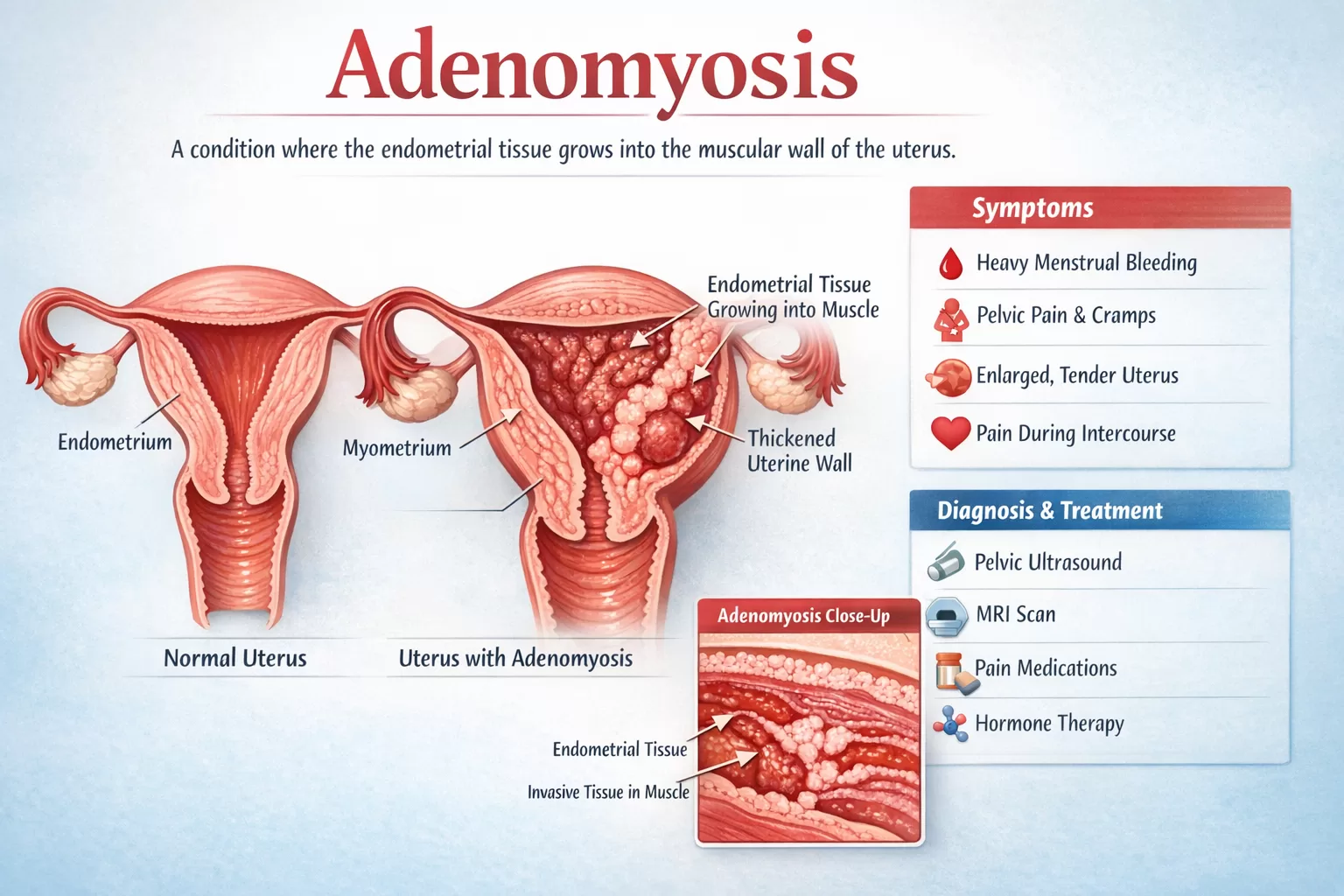
Adenomyosis is a condition where tissue similar to the lining of the uterus grows into the muscular wall of the uterus, causing heavy, painful periods, pelvic pain, an enlarged tender uterus and — for some women — difficulty conceiving or recurrent miscarriage. It is common, it is benign, and it is very treatable. Importantly, hysterectomy is not your only option, especially if you still hope to have a baby.
I'm Dr Kokum Jayasinghe, a fertility specialist and gynaecological surgeon in Melbourne. I diagnose and treat adenomyosis with two goals in mind: settling your symptoms, and protecting your fertility for the future you want.
Request an appointment · 03 9417 3755 · Level 5/36 Wellington St, Collingwood VIC 3066
Adenomyosis: key facts at a glance
|
What it is |
Endometrial-like tissue growing inside the muscle wall (myometrium) of the uterus |
|
How common |
Around 1 in 5 to 1 in 3 women; most often diagnosed in the 30s and 40s |
|
Main symptoms |
Heavy periods, severe period pain, chronic pelvic pain, pain with sex, bloating, fatigue from low iron |
|
Is it cancer? |
No — adenomyosis is benign |
|
Can you get pregnant? |
Yes. Many women conceive naturally; others need help. It can reduce fertility and raise miscarriage risk |
|
How it's diagnosed |
History + examination + transvaginal ultrasound; MRI in selected cases |
|
Treatments |
Pain relief, hormonal therapy (including Mirena), GnRH analogues, fertility-preserving surgery, IVF, ablation, or hysterectomy |
|
Does it go away? |
Symptoms usually settle after menopause — adenomyosis is oestrogen-dependent |
What is adenomyosis?
Your uterus has two main layers: the endometrium (the lining that sheds each month) and the myometrium (the thick muscle wall). In adenomyosis, endometrial-like tissue becomes embedded within the myometrium. That tissue still responds to your hormone cycle — it thickens and bleeds — but it has nowhere to escape. The result is inflammation, trapped blood, muscle thickening and a uterus that becomes enlarged, boggy and tender. The zone where the lining meets the muscle (the junctional zone) often becomes thickened and irregular, which is one of the features I look for on ultrasound.
Adenomyosis can be diffuse (spread through the uterine wall) or focal — a discrete nodule called an adenomyoma, which can look very like a fibroid on a scan. The distinction matters, because focal disease is far more likely to suit fertility-preserving surgery.


What causes adenomyosis?
The exact cause isn't fully understood, and there is probably more than one pathway. Current thinking points to:
- Disruption of the endometrial–myometrial border, allowing lining tissue to invade the muscle — which may explain the association with previous uterine surgery such as caesarean, curettage or fibroid surgery
- Oestrogen dependence — which is why symptoms improve after menopause and why hormonal treatments work well
- Inflammatory and immune factors within the uterine wall
- Genetic predisposition — adenomyosis often runs in families
You did not cause your adenomyosis, and nothing you did or didn't do made it worse. This is one of the first things I want my patients to hear.
Symptoms of adenomyosis
Some women have adenomyosis with no symptoms at all. Others are significantly disabled by it. Common symptoms include:
- Heavy menstrual bleeding — flooding, clots, hourly pad changes, bleeding through clothing or overnight
- Severe period pain — deep cramping or knife-like pain that has worsened over the years
- Chronic pelvic pain between periods, and pain during or after sex
- Pelvic fullness, bloating or "looking pregnant" from an enlarged uterus
- Lower back pain, or pain radiating down the legs
- Bleeding or spotting between periods
- Fatigue, breathlessness, brain fog and hair loss from iron deficiency
- Difficulty conceiving, or recurrent miscarriage

When to seek specialist review
If pain stops you working or exercising; if you're going through more than a pad or tampon every two hours; if you're passing large clots; if your period lasts more than seven days; if your iron is low; if sex hurts; or if you've been trying to conceive without success. Period pain that dominates your life is never something you simply have to accept.
Adenomyosis, endometriosis or fibroids?
These three conditions overlap constantly, and many women have more than one. Getting the diagnosis right changes the treatment plan entirely.
| Adenomyosis | Endometriosis | Fibroids | |
| Where it is | Inside the uterine muscle wall | Outside the uterus — ovaries, pelvic lining, bowel, bladder | Benign muscle growths in or on the uterine wall |
| Hallmark symptom | Heavy, painful periods; bulky tender uterus | Pelvic pain throughout the cycle, pain with sex | Heavy periods, pressure; often painless |
| Best first test | Transvaginal ultrasound; MRI if unclear | Specialist ultrasound; laparoscopy is definitive | Ultrasound |
| Fertility impact | Impaired implantation, higher miscarriage risk | Distorted anatomy, inflammation, tubal damage | Depends on location — submucosal matter most |
| Definitive cure | Hysterectomy | Excision surgery can give lasting relief | Myomectomy or hysterectomy |
Up to half of women with adenomyosis also have endometriosis, and many have fibroids as well. Because I treat all three — medically and surgically — you don't need to bounce between clinicians. Learn more about my approach to endometriosis and laparoscopic surgery.
Adenomyosis and fertility: can I still get pregnant?
Yes — many women with adenomyosis conceive, including naturally. But it can make conception harder, and it's the part of this condition most often glossed over.
How adenomyosis affects conception
- Impaired implantation. When the junctional zone is thickened and inflamed, an embryo may struggle to implant
- Abnormal uterine contractions, interfering with sperm transport and embryo settling
- Local inflammation and altered receptivity of the endometrium
- Distorted anatomy from an enlarged uterus or large adenomyoma
- Coexisting conditions — endometriosis, tubal disease and fibroids add their own effects
Research suggests adenomyosis is associated with lower implantation and clinical pregnancy rates and higher miscarriage rates in IVF. Encouragingly, these outcomes can often be improved with the right preparation — and that's where a fertility specialist's input differs from a general gynaecologist's.


My fertility-first approach
My practice is built on enhancing natural conception wherever possible, and using assisted reproduction when needed. For adenomyosis, that means:
- Mapping the disease properly — diffuse or focal? Is the cavity involved? Is there endometriosis or tubal disease too?
- A complete fertility work-up alongside it — AMH and ovarian reserve, cycle assessment, thyroid and iron studies, semen analysis for your partner. Adenomyosis is rarely the only factor
- Deciding whether to treat first or try first. For mild disease in a younger woman, timed conception or ovulation induction may be reasonable. For significant disease, pre-treatment then IVF is usually the stronger play
- Optimising the uterus before transfer — freezing embryos first, then using GnRH analogues to quieten the adenomyosis before a frozen embryo transfer
- Correcting what can be corrected surgically — hysteroscopic treatment of polyps, submucosal fibroids, septum or adhesions, and laparoscopic excision of endometriosis
- Being honest about time. If you're over 35 or your AMH is falling, I'd rather discuss egg or embryo freezing now than watch options narrow
Adenomyosis and pregnancy
Most women with adenomyosis have healthy pregnancies. However, there is a modestly increased risk of early miscarriage, preterm birth, pre-eclampsia and placental problems, malpresentation and higher caesarean rates, and postpartum haemorrhage. This is why I recommend planned pregnancy care with closer monitoring — early growth and blood pressure surveillance, an agreed birth plan, and a proactive approach to bleeding after delivery.
If you've had two or more miscarriages, adenomyosis should be investigated as part of a full recurrent miscarriage work-up.

How adenomyosis is diagnosed
Adenomyosis is under-diagnosed and frequently mislabelled as "just bad periods" for years. A careful assessment usually gives clear answers.
History
Bleeding pattern, pain and its impact, previous uterine surgery, family history and your fertility plans.
Pelvic Examination
An enlarged, globular, tender uterus is a classic finding. Always optional and entirely at your pace.
Transvaginal ultrasound
The first-line test, looking for a globular uterus, asymmetrical wall thickening, myometrial cysts, fan-shaped shadowing and a thickened junctional zone.
MRI
Where ultrasound is equivocal, or to distinguish an adenomyoma from a fibroid before surgery.
Hysteroscopy and laparoscopy
These assess and treat the conditions that travel with adenomyosis.
Blood tests — full blood count and iron studies, thyroid function, and ovarian reserve testing.
A note on certainty
Microscopic confirmation is only possible after hysterectomy. That does not mean you must wait for a hysterectomy to be believed or treated. Experienced specialists diagnose adenomyosis confidently on symptoms, examination and imaging — and treat it accordingly.
Treatment options for adenomyosis
There is no single "best" treatment. The right choice depends on your symptoms, your age, and whether you want to be pregnant now, later, or not at all.
| Your goal | Options I'd typically discuss |
| Trying to conceive now | Fertility work-up, ovulation support, treating coexisting endometriosis/polyps/fibroids, focal adenomyoma excision, IVF with pre-transfer suppression, tranexamic acid and NSAIDs, iron correction |
| Want to conceive later | Hormonal therapy (pill, progestogen or Mirena), fertility assessment, egg or embryo freezing, planned review |
| Not planning pregnancy | Mirena IUD, continuous pill, tranexamic acid, GnRH analogues with add-back, endometrial ablation, laparoscopic hysterectomy |
Non-hormonal symptom relief
NSAIDs taken before pain peaks reduce both pain and bleeding. Tranexamic acid during your period substantially cuts blood loss and is safe when trying to conceive. Iron replacement — oral or intravenous — is often transformative.
Hormonal therapy
The mainstay when pregnancy isn't immediately planned: the levonorgestrel IUD (Mirena), often the single most effective option; the combined pill, often taken continuously; progestogens; GnRH analogues, which shrink adenomyosis and are useful before surgery or embryo transfer; and aromatase inhibitors in refractory cases. Hormonal treatments manage adenomyosis — they don't eradicate it — which is a reason to plan ahead if you want children.
Fertility-preserving surgery
Diffuse adenomyosis can't be "excised" the way endometriosis can. However, focal adenomyoma excision can suit a well-defined nodule distorting the cavity; hysteroscopic surgery restores a healthy cavity and can improve implantation; and laparoscopic excision of endometriosis treats the condition that so often coexists.
Endometrial ablation
Reduces bleeding and suits some women with superficial disease who have completed their families. In deeper adenomyosis, pain can persist or worsen. It is not an option if you want to be pregnant.
Hysterectomy
The only definitive cure, and for severe, treatment-resistant disease it can be life-changing. The ovaries are normally preserved, so you don't enter surgical menopause. Where it's the right decision, it should be performed by a minimally invasive (laparoscopic) approach wherever possible. My starting position, though, is different from many clinics: hysterectomy is the last conversation, not the first.
Living well with adenomyosis
- Correcting iron deficiency — test ferritin, treat properly, retest
- Heat, movement and pelvic floor physiotherapy
- Anti-inflammatory nutrition — see my fertility diet and lifestyle guide
- Sleep, stress and nervous-system care — chronic pelvic pain sensitises the nervous system
- Stopping smoking or vaping, and moderating alcohol
- Persistent pain support — pain specialists, psychologists and pain programs
Why choose Dr Kokum for adenomyosis care
A fertility specialist and a surgeon in one
I hold specialist qualifications in obstetrics, gynaecology and reproductive endocrinology, and I am an accredited fertility specialist with Melbourne IVF with active affiliations to leading Melbourne hospitals. The surgical decision and the fertility decision are made together, by the same person.
A fertility-preserving philosophy
I focus on enhancing natural conception first, then assisted reproductive technologies. Hysterectomy is reserved for women for whom it's genuinely the right answer.
Lived experience
I have faced my own fertility challenges — I know what it is to sit on the other side of the desk. Nothing about your pain will be minimised in my rooms. Read more about my story.
Inclusive, convenient care
Single women, same-sex couples and women with complex histories are always welcome. Consulting at Level 5/36 Wellington St, Collingwood and 268 Manningham Road, Templestowe Lower.
What happens at your first appointment
- A detailed medical, menstrual, pain and reproductive history
- Review of previous scans, surgeries, treatments or IVF cycles — please bring them
- Examination and pelvic ultrasound if appropriate
- A clear explanation of what's causing your symptoms, and a discussion of your fertility timeline
- A written, step-by-step plan with realistic expectations, options, risks and costs
You'll need a GP referral to claim your Medicare rebate. Book your consultation here.

Frequently asked questions about adenomyosis
Can you get pregnant with adenomyosis?
Yes — many women conceive naturally. Because adenomyosis can reduce implantation and increase miscarriage risk, if you're under 35 and have been trying for 12 months, or 35 and over and trying for six months, it's worth a fertility assessment.
Is adenomyosis the same as endometriosis?
No. In adenomyosis the tissue grows inside the uterine muscle wall; in endometriosis, tissue similar to the lining of the uterus grows in areas outside of the uterus. They often occur together.
Can adenomyosis be treated without a hysterectomy?
Absolutely. Most women are managed with pain relief, tranexamic acid, hormonal therapy such as a Mirena or the pill, GnRH analogues, and treatment of coexisting conditions. Fertility-preserving surgery is possible in selected focal cases.
Does adenomyosis affect IVF success rates?
Studies suggest lower implantation and pregnancy rates and higher miscarriage rates with untreated significant adenomyosis. Outcomes can often be improved by freezing embryos first, then suppressing the adenomyosis before a frozen embryo transfer.
Will a Mirena help my adenomyosis?
For many women it's the most effective non-surgical option. It isn't suitable while trying to conceive and should be removed before starting fertility treatment.
Does adenomyosis go away on its own?
It's driven by oestrogen, so symptoms typically settle after menopause. Before then it tends to persist and may progress.
Is adenomyosis cancer?
No. It is benign and does not develop into cancer. Heavy or irregular bleeding should still be properly assessed.
Do I need a referral?
A GP referral is recommended so you can claim your Medicare rebate. Call (03) 9417 3755 or request a booking online.
Book a consultation about adenomyosis in Melbourne
You shouldn't have to plan your life around your period, and you shouldn't be told a hysterectomy is your only option before anyone has asked whether you want children. If you have heavy or painful periods, ongoing pelvic pain, or you're struggling to conceive, let's find out exactly what's going on.
This page is general information and is not a substitute for personalised medical advice. Please consult Dr Kokum Jayasinghe or your GP about your individual circumstances.