
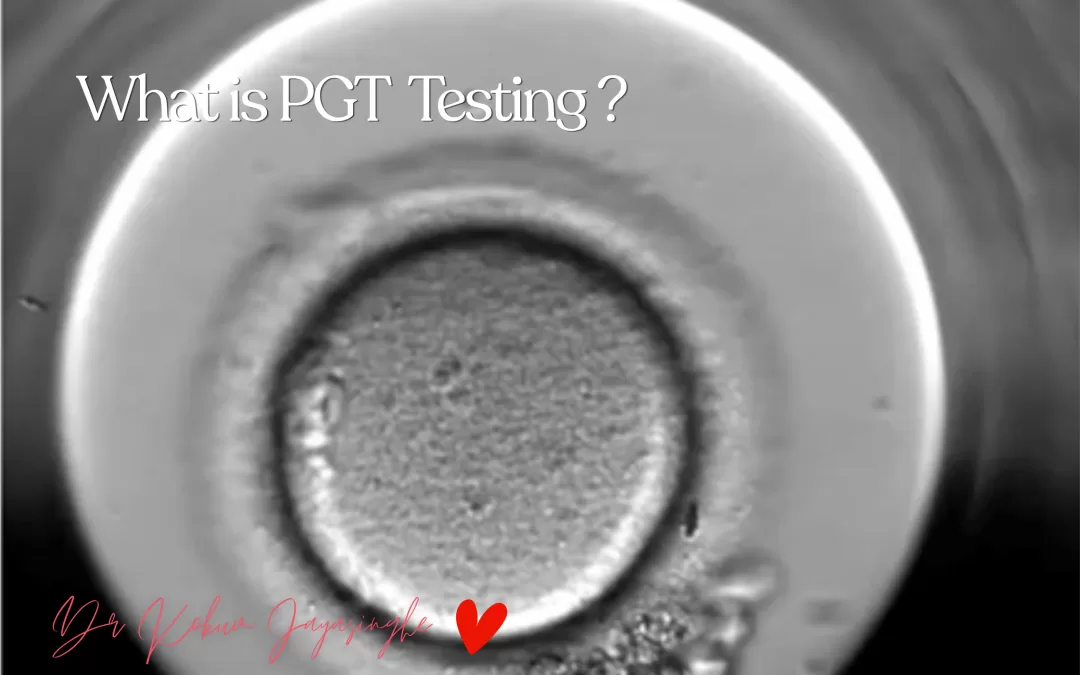
If you’re undergoing IVF, you may have heard the term PGT and wondered what it means.
PGT stands for Preimplantation Genetic Testing. It is a specialised form of genetic testing that can be performed on embryos created through IVF before an embryo is selected for transfer.
For some individuals and couples, PGT can provide valuable information about embryos and help guide fertility treatment. However, it isn’t appropriate or necessary for everyone.
Understanding what PGT involves, the different types available, and when it may be recommended can help you make informed decisions about your IVF journey.
What Is PGT?
Preimplantation Genetic Testing involves analysing a small number of cells from an embryo created through IVF.
The cells are carefully removed from the embryo at the appropriate stage of development and sent for genetic analysis.
The embryo is then generally frozen while testing is completed. Once the results are available, your fertility specialist can discuss which embryos may be suitable for transfer based on your individual circumstances.
PGT can be used to look for specific genetic or chromosomal abnormalities, depending on the type of testing being performed.
What Are the Different Types of PGT?
There are three main types of preimplantation genetic testing.
PGT-A: Testing for Chromosomal Abnormalities
PGT-A stands for Preimplantation Genetic Testing for Aneuploidy.
It assesses the number of chromosomes present in an embryo.
Embryos with an abnormal number of chromosomes are less likely to result in an ongoing pregnancy and may have a higher risk of miscarriage.
PGT-A can provide additional information about embryos and may be considered in certain circumstances. However, it is important to understand that PGT-A does not guarantee implantation or a successful pregnancy.
Whether PGT-A is beneficial depends on individual factors, including age, fertility history, and the number and quality of embryos available.
PGT-M: Testing for Specific Genetic Conditions
PGT-M stands for Preimplantation Genetic Testing for Monogenic Disorders.
This type of testing is used when there is a known genetic condition in the family that could be passed on to a child.
Examples may include conditions such as:
- Cystic fibrosis
- Huntington’s disease
- Thalassaemia
- Certain inherited neurological conditions
PGT-M allows embryos to be tested for a specific genetic condition before transfer.
This can be particularly important for individuals or couples who know they carry a genetic condition or are at increased risk of passing one on to their child.
PGT-SR: Testing for Chromosomal Structural Changes
PGT-SR stands for Preimplantation Genetic Testing for Structural Rearrangements.
This type of testing may be recommended when an individual or couple carries a known chromosomal structural rearrangement, such as a balanced translocation.
Although someone carrying a balanced chromosomal rearrangement may be healthy themselves, it can sometimes increase the risk of producing embryos with an unbalanced chromosome arrangement.
PGT-SR can help identify embryos that do not carry the specific chromosomal imbalance being tested for.
How Is PGT Performed?
PGT is performed as part of an IVF treatment cycle.
The general process involves:
- Ovarian stimulation – Medication is used to stimulate the ovaries to develop multiple eggs.
- Egg collection – The eggs are collected during a procedure.
- Fertilisation – The eggs are fertilised with sperm in the laboratory.
- Embryo development – The resulting embryos are monitored as they develop.
- Embryo biopsy – A small number of cells are carefully removed from an embryo.
- Genetic testing – The cells are analysed by a specialised genetic laboratory.
- Embryo freezing – Embryos are generally frozen while testing is completed.
- Embryo transfer – Where appropriate, an embryo may subsequently be selected for transfer based on the treatment plan.
The exact process can vary depending on the type of PGT being performed and the individual circumstances of the patient.
Is PGT Recommended for Everyone?
No.
PGT is not a routine requirement for every person undergoing IVF.
Whether PGT is appropriate depends on several factors, including:
- Your age
- Medical history
- Fertility history
- Previous pregnancy losses
- Family history of genetic conditions
- Known genetic or chromosomal abnormalities
- Number and quality of embryos available
- Your individual fertility goals
For some people, PGT may provide useful information. For others, it may offer limited benefit or not be recommended.
This is why the decision should be made in consultation with your fertility specialist and, where appropriate, a genetic counsellor.
Does PGT Guarantee a Healthy Pregnancy?
It’s important to understand that PGT is a screening or testing tool, not a guarantee of pregnancy or a healthy baby.
Even when an embryo is found to have the expected genetic or chromosomal result for the test performed, pregnancy is not guaranteed.
Other factors can influence whether an embryo implants and whether a pregnancy progresses successfully.
Your fertility specialist can explain what PGT can—and cannot—tell you based on your individual circumstances.
What Are the Benefits of PGT?
For appropriately selected patients, PGT may provide additional information that can help guide embryo selection and fertility treatment.
Depending on the type of PGT, it may:
- Identify embryos affected by a specific inherited condition.
- Help identify embryos with certain chromosomal abnormalities.
- Reduce the chance of transferring an embryo affected by the genetic condition being tested for.
- Provide additional information when planning embryo transfer.
However, the potential benefits need to be considered alongside the limitations of testing and the individual circumstances of each patient.
Making an Informed Decision
Hearing about PGT can sometimes make IVF feel even more complicated.
The important thing to remember is that more testing isn’t necessarily better for everyone.
The decision to undergo PGT should be based on your individual circumstances rather than simply because it is available.
A fertility specialist can explain whether PGT may be appropriate, what information it could provide, and how the results may influence your treatment plan.
The Bottom Line
PGT is a specialised genetic testing technique that can provide valuable information about embryos created through IVF.
There are different types of PGT, including PGT-A, PGT-M, and PGT-SR, each designed to answer different genetic questions.
However, PGT is not suitable or necessary for everyone, and it does not guarantee pregnancy or a healthy baby.
If you’re considering IVF and have questions about PGT, speaking with a fertility specialist can help you understand whether genetic testing may be appropriate for you and your individual fertility journey.
The goal isn’t to pursue every available test.
It’s to choose the right approach for you.