
September is PCOS Awareness Month — but in 2026, there is something very important to be aware of: PCOS has a new name.
Polycystic Ovary Syndrome (PCOS) has officially been renamed Polyendocrine Metabolic Ovarian Syndrome (PMOS).
At first glance, changing the name of a condition we have used for decades might seem unnecessary. But I think this change actually matters.
As a fertility specialist, I have seen many women come to me saying:
“I was told I have cysts on my ovaries,”
or alternatively:
“My ultrasound doesn’t show cysts, so how can I have PCOS?”
Both questions highlight one of the fundamental problems with the old name.
PCOS was never really about “cysts”
Despite its name, PCOS does not mean that a woman has abnormal ovarian cysts.
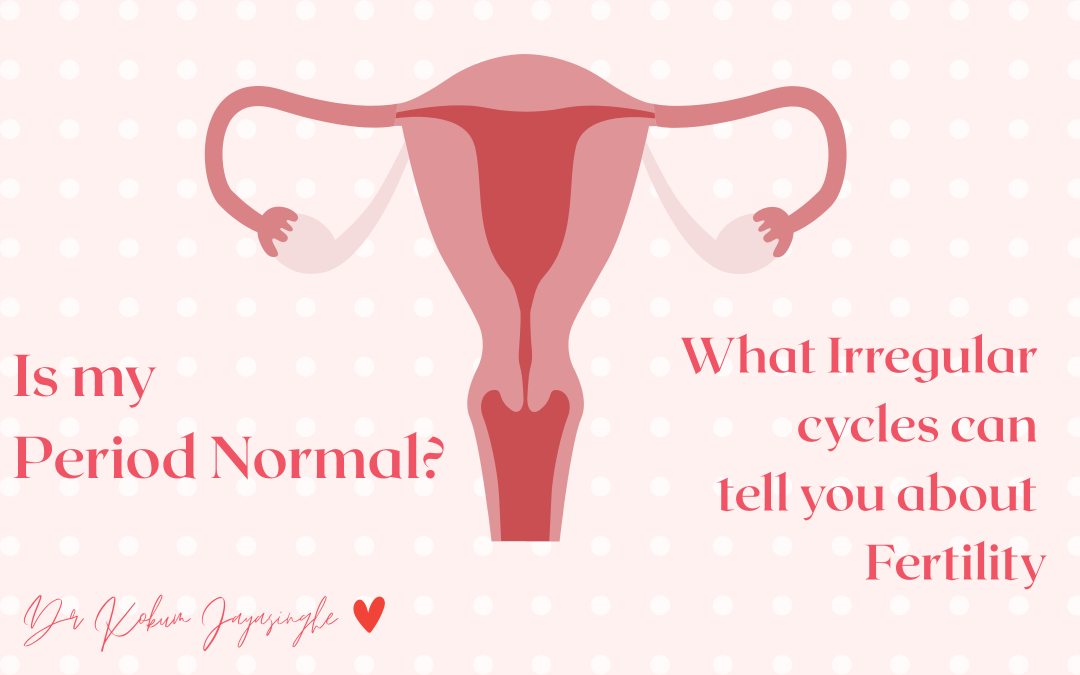
What we commonly see on ultrasound are multiple small ovarian follicles — not pathological cysts. More importantly, this is not simply a condition of the ovaries.
It can involve:
- ovulation
- reproductive hormones
- insulin and metabolism
- weight
- skin and hair
- psychological wellbeing
- long-term health
Fertility is an important part of the picture, but it is not the whole picture.
That is why Polyendocrine Metabolic Ovarian Syndrome — PMOS — is a much more accurate description.
Why change the name now?
This wasn’t a decision made overnight.
The international effort to rename PCOS took approximately 14 years and involved experts, professional organisations and, importantly, women living with the condition.
The global consensus process involved 56 leading professional and patient organisations and thousands of women and healthcare professionals around the world.
The final consensus was published in The Lancet in 2026, with the new name chosen to better represent the endocrine, metabolic and ovarian components of the condition.
The change has subsequently been endorsed internationally, including by the American Society for Reproductive Medicine (ASRM), and incorporated into the International Evidence-based Guideline terminology.
Does this mean the condition itself has changed?
No.
This is important.
Women previously diagnosed with PCOS have not suddenly developed a different condition.
The diagnostic principles and current evidence-based management recommendations remain unchanged during the transition from PCOS to PMOS.
What has changed is how we describe and, hopefully, how we think about the condition.
And that may ultimately be much more important than it sounds.
PMOS reminds us to look beyond fertility
When I see a woman with PCOS/PMOS who wants to become pregnant, the temptation can be to focus immediately on one question:
How do we make her ovulate?
Of course ovulation matters. But good fertility care should look at the woman as a whole.
Depending on the individual, that may mean considering:
- menstrual regularity and ovulation
- androgen symptoms
- metabolic health and glucose risk
- weight and lifestyle where relevant
- psychological wellbeing
- longer-term health
— as well as her age, ovarian reserve, partner factors and fertility goals.
Not every woman with PMOS needs IVF.
- Some women ovulate spontaneously.
- Some may benefit from lifestyle and metabolic optimisation.
- Others require ovulation induction.
- Some ultimately need IVF because of additional fertility factors, or because simpler treatments have not worked.
The diagnosis should guide treatment — not automatically determine it.
And PMOS does not look the same in every woman
This is perhaps one of the most important messages I give my patients.
Two women can both meet the diagnostic criteria for PMOS and look completely different.
- One may have irregular periods, acne and insulin resistance.
- Another may be lean, physically active and have few outward metabolic features but rarely ovulate.
- Another may only discover the condition when she starts trying for a baby.
That variation is exactly why treatment needs to be individualised.
A label is useful when it helps us understand disease. It becomes less useful when we allow the label to replace thinking about the person sitting in front of us.
What does PMOS mean for your chances of having a baby?
A diagnosis of PCOS/PMOS does not mean that you cannot become pregnant.
It is a common cause of ovulatory infertility, but it is also one for which we have multiple effective treatment options.
The important question is not simply:
“Do I have PCOS?”
It is:
“How is PMOS affecting me, my ovulation, my metabolic health and my fertility — and what is the simplest effective treatment for my situation?”
That is a much more useful conversation.
A new name — but hopefully a bigger change
Medicine changes as our understanding changes.
Replacing Polycystic Ovary Syndrome with Polyendocrine Metabolic Ovarian Syndrome may look like changing four words.
But I hope it does something bigger.
I hope it:
- moves the conversation away from “cysts”
- reminds us that this is a complex endocrine and metabolic condition
- encourages earlier recognition
- makes us think beyond the ovaries when caring for women throughout their reproductive lives
PCOS may now be called PMOS. The name is new. The women living with it are not — and they deserve care that sees the whole picture.
Living with PCOS or PMOS and thinking about pregnancy?
Dr Kokum Jayasinghe is a fertility specialist in Collingwood, Melbourne, with a special interest in PCOS/PMOS and ovulatory infertility. Request an appointment or call 03 9417 3755.
References and further reading
- Teede HJ, Piltonen TT, Dokras A, et al. Polyendocrine metabolic ovarian syndrome, the new name for polycystic ovary syndrome: a multistep global consensus process. The Lancet. 2026. doi:10.1016/S0140-6736(26)00717-8
- International Evidence-based Guideline for the Assessment and Management of Polyendocrine Metabolic Ovarian Syndrome (PMOS), formerly PCOS. Monash Centre for Health Research and Implementation. Updated 2026.
- Monash University. Polyendocrine Metabolic Ovarian Syndrome: New name to improve diagnosis and care of condition affecting 170 million women worldwide. May 2026.
- American Society for Reproductive Medicine. PCOS is Now PMOS: Understanding the Name Change. May 2026.